
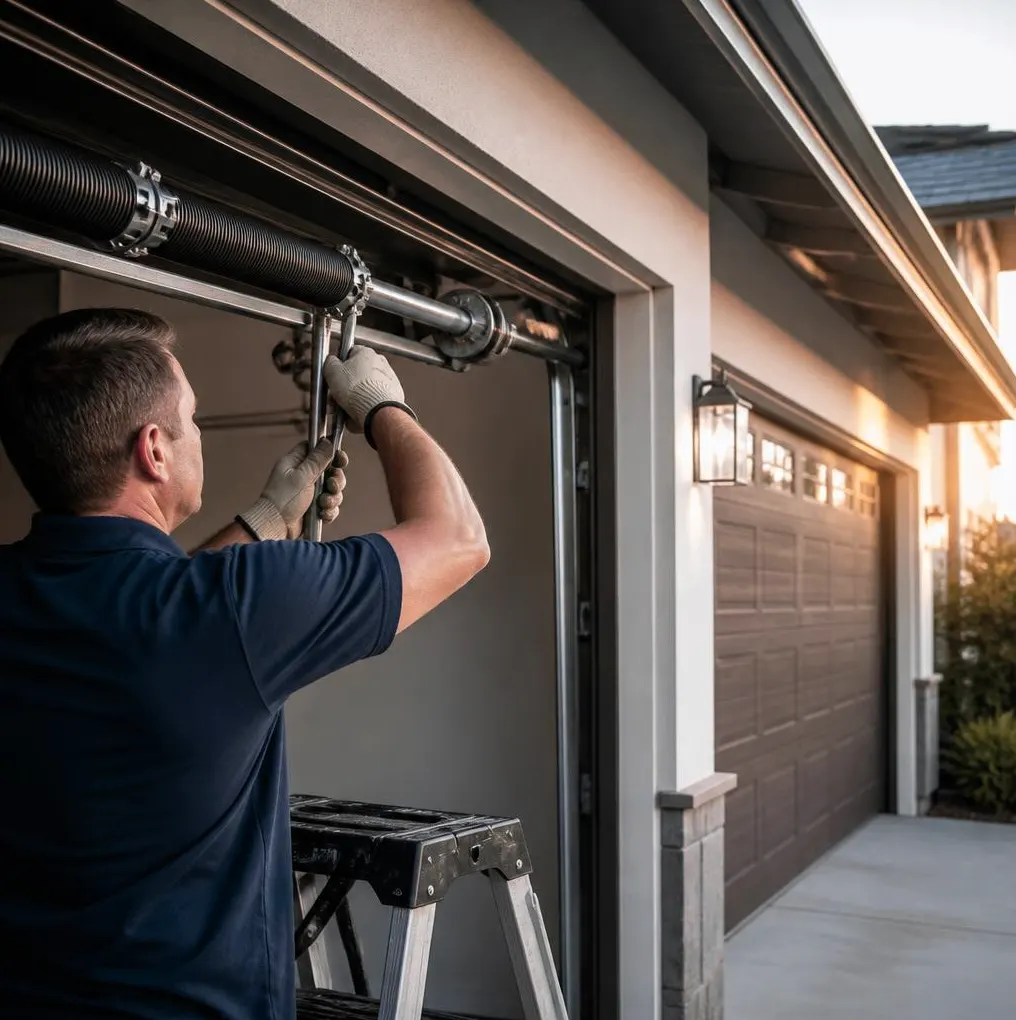
Short answer: windows are worth it if you want natural light in the garage and better curb appeal from the street, and you're okay giving up a little privacy and a small amount of insulation value to get it. On a properly built door, glass does not make the door easier to break into. The bigger question isn't "windows or no windows" — it's where they're placed, what kind of glass is behind them, and whether your garage faces a hot afternoon sun or a busy street.
What windows actually buy you
A garage that's used as a workshop, home gym, or extra storage area benefits a lot from daylight. Running a light bulb or leaving the overhead door open all day just to see what you're doing gets old fast, and an open door during a dusty, dry South Bay summer lets in exactly the kind of particulate and smoke you'd rather keep out. A row of windows near the top panel solves that without opening anything.
Windows also change how a house reads from the street. A flat, blank door can look heavy on a home with a lot of glass elsewhere in the facade. Even a narrow window row breaks that up and tends to match the style of the house better, which matters if you're also updating siding, trim, or the front door at the same time.
What to ignore
- "More windows equals more value" sales pitches. A door with windows across every panel looks dramatic in a showroom photo but rarely matches a typical single-family home, and it maximizes the insulation and privacy trade-offs for not much extra benefit.
- Decorative grilles with no real function. Snap-in grids that just sit on top of a single pane don't add privacy or strength — they're purely cosmetic. Fine if you like the look, but don't pay a premium expecting performance from them.
- Tinted glass sold as a security feature. Tint reduces visibility, which helps privacy, but it isn't the thing keeping someone out. The door's construction and the opener's lock do that work.
Privacy: where it actually matters
The real privacy question is about sightlines into the garage, not into the house. If your garage stores anything worth not advertising — bikes, tools, a second vehicle — a full row of clear glass at eye level facing the sidewalk tells anyone walking by exactly what's inside. Two practical fixes:
- Choose frosted, obscure, or textured glass instead of clear. You still get daylight, just not a clear view in.
- Place the window row higher on the door, near the top panel, instead of at eye level. It still lights the space but requires someone to be looking up and in rather than glancing across.
If your garage faces a side yard or backs up to a fence line instead of the street, this matters a lot less and you can lean toward clear glass without much downside.
Security: what's true and what's a myth
Glass in a garage door panel is small, reinforced in most residential designs, and usually positioned well above where someone could reach a manual release or door handle even if it broke. In practice, windows aren't the security issue people assume they are. The bigger factors are:
- Whether the opener has rolling-code technology (most do today) versus an older fixed-code remote that's easier to clone.
- Whether the emergency release cord is positioned where it can be reached or hooked from outside through a gap.
- Whether the door and track are solid enough to resist prying at the bottom corners, which has nothing to do with windows at all.
If security is a real concern for your situation — a detached garage, an alley-facing door, a history of break-ins nearby — put your attention on the opener and the bottom seal, not on whether to skip windows.
Insulation: the trade-off that's easy to underestimate
Any window is a thermal weak point compared to a solid insulated panel, because glass conducts heat faster than foam-backed steel or wood composite. For inland San Jose neighborhoods that see real summer heat, a wide window row on a south- or west-facing garage door will let in noticeably more afternoon heat than a blank insulated panel would. That matters most if the garage shares a wall with living space or is used as a workspace in summer.
Double-pane or insulated glass inserts cut this gap significantly compared to single-pane glass, for a moderate cost increase. If you're set on windows but care about temperature swings, ask specifically for insulated glass units rather than assuming all glass options are equal — many entry-level doors default to single pane unless you request otherwise.
Questions worth asking before you order
- Is the glass single-pane or insulated, and what's the price difference?
- Can the window inserts be swapped later, or are they built into the panel permanently?
- What's the frame material — aluminum frames can pit over time near salt air on the coastal side of the service area, while composite frames hold up better in that environment.
- Does the window placement line up with where my garage actually needs light, or is it just the standard layout the dealer stocks?
When to call San Jose Garage Door Service
If you're weighing windows as part of a full door replacement, our Garage Door Installation service includes walking through glass type, placement, and frame options against your garage's orientation and what you actually use the space for — not just picking from a catalog page. If you already have a door with windows and the panel seal has failed or the glass has fogged between panes, our Garage Door Maintenance visits catch that kind of panel damage early, before it turns into a full panel replacement.
Thinking about adding windows to your next door, or want a second opinion on what's already installed? Call San Jose Garage Door Service — we work throughout San Jose, Santa Clara, Campbell, Milpitas, Sunnyvale, Cupertino, Morgan Hill, and Los Gatos, and we're happy to walk your garage with you before you spend money on glass you won't use.